
Category
Gap Year Program
Category
Gap Year Program 
 Bachelor of Finance & Artificial Intelligence Bachelor of Management & Technology Integrated Bachelors and Masters in Management & Technology Graduate Program in Entrepreneurial Leadership Integrated Bachelors and Masters in Management & Technology Tetr Pathfinder: China Edition Tetr Pathfinder: Europe Edition Tetr 7-day Basecamp Student Life Contact Us Jobs


Table of Contents
Learn how project-based learning turns classroom knowledge into business judgment, confidence, and practical skills.
Most students can learn a business framework long before they've had to use one under pressure. They can explain market segmentation in a seminar, then freeze the first time a real customer says no to their business product. This gap between understanding and application explains why experiential learning matters.
At Tetr College of Business, this learn-business-by-doing-business approach is an integral part of the curriculum. To understand how it shapes business education, it’s important to examine what real-world project learning includes.
A real-world project begins with an open business problem rather than a predetermined answer. Students might study a market, interview customers, build a prototype, plan a launch, or advise an external stakeholder.
Unlike an assessment exercise, the work includes constraints. It can include time, cost, customer behavior, team capacity, and incomplete information that influence the business outcome. This form of project-based learning turns a subject into connected decisions.
Hands-on learning in business school isn't just a practical skill. It gives confidence under uncertainty. A student who has delivered a flawed product, absorbed the client feedback, and sent out a better version of the business has learned something no lecture can teach: these setbacks are data, not verdicts.
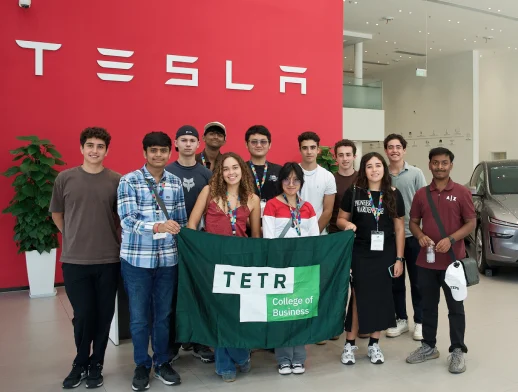
This is where Tetr's learning model diverges further from convention. Our students move across multiple countries during their program, which means the "real world" they're practicing in keeps changing. In our 7-day Basecamp, experiential learning looks like this:
Classroom subjects are often taught separately, while a project brings them together. Marketing affects the budget; a change in the product alters operations; technology may introduce costs or data concerns. Students see the business as a connected system.
Business problems rarely arrive with complete information. Through real-world business projects, students identify what they know, examine what remains uncertain, and choose a reasonable next step. The aim is a defensible decision, not a lucky guess.
A weak survey, prototype, or campaign gives students evidence. They can trace the result to an assumption, revise the approach, and test again. Reflection becomes part of execution rather than an end-stage activity.
Dividing tasks is not enough when a team shares an outcome. Members must explain decisions, resolve disagreements, and meet commitments because one delay can affect the business project. Such accountability belongs in practical business education.
Together, these experiences help students connect business knowledge with action. Add to that global exposure, and they learn to change how they think, not simply where they study. This principle is also visible in Tetr's short-format learning experiences.
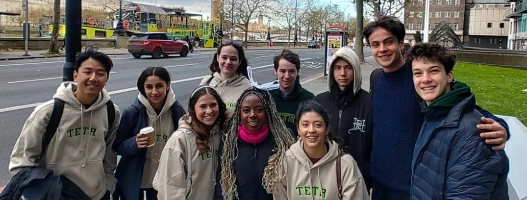
The Tetr 7-Day Basecamp gives students a brief introduction to this way of learning. Offered in global cities such as New York, Singapore, Shanghai, Dubai, Buenos Aires, and Tokyo, the program combines orientation with business and cultural immersion.
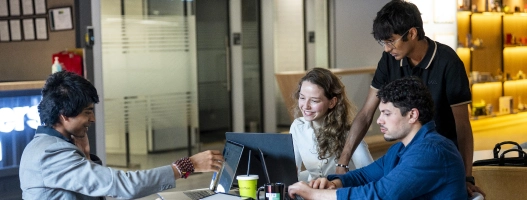
Students work in teams to create a minimum viable product and pitch their concept to investors, with the help of mentors. They have to do quick research, divide responsibilities, make trade-offs, and explain what startup they have built under the compressed timeline. The learning by doing philosophy becomes tangible because every business decision contributes to a shared outcome.
Business theory becomes more useful when students apply it in a practical context. Experiential learning combines practical choices, teamwork, constraints, and feedback into the same experience and helps students learn judgment through practice. They leave with more than an understanding of how businesses actually work; they also have greater confidence in deciding what to do when conditions change.
Explore the Tetr’s undergraduate and postgraduate business programs to learn how you can turn business ideas into a practical experience.

What is experiential learning for college students?
Experiential learning allows students to apply academic concepts through projects, fieldwork, simulations, internships, and other practical experiences.
How does hands-on learning improve the college learning experience?
How do real-world projects prepare students for careers?
