
Category
Gap Year Program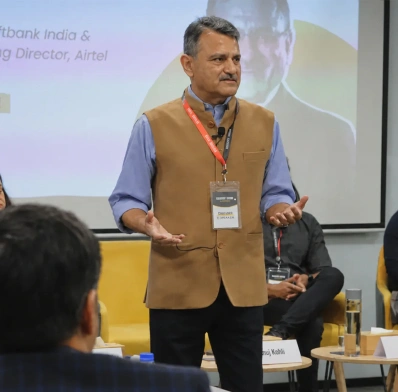

Category
Gap Year Program 
 Bachelor of Finance & Artificial Intelligence Bachelor of Management & Technology Integrated Bachelors and Masters in Management & Technology Graduate Program in Entrepreneurial Leadership Integrated Bachelors and Masters in Management & Technology Tetr Pathfinder: China Edition Tetr Pathfinder: Europe Edition Tetr 7-day Basecamp Student Life Contact Us Jobs



Table of Contents
An Exploration of what it means to learn across multiple countries, and how geography becomes part of the curriculum for Tetr students.
At Tetr, students don't just study abroad; they build businesses across seven countries, adapting to a new market every semester. Ask them what they remember most, and the answer rarely involves a lecture hall. It is the negotiation that did not go as planned at a local market, the late-night conversation with a teammate who grew up on another continent, or the moment a business idea that made perfect sense in Dubai needed to be rebuilt entirely for a market in Bangkok. Distance, it turns out, teaches things a syllabus alone cannot.
That idea sits at the center of how Tetr designs its global classroom learning experience for undergraduates arriving from different corners of the world, all moving together across seven countries over the course of their degree.
Most study abroad programs follow a familiar pattern: a single semester away, a handful of electives, and a return to business as usual. The exposure is real, but often brief, and the learning is added on rather than built in.
Tetr's Bachelor's Program in Management & Technology takes a different starting point. Movement across seven countries is the degree's structure, not a feature layered onto it. A student arriving from India, the US, or the UAE does not simply study in Europe for a term and return with a transcript line. They build, present, and solve problems in a new market every few months, carrying lessons from one country into the next. The classroom changes location repeatedly, but the expectation to apply ideas in real conditions stays constant.
Each stop in the journey offers more than a change of scenery. It offers a market with its own consumer habits, regulatory environment, and competitive dynamics, all of which become source material for coursework rather than background noise. Europe, one of the seven countries on the journey, is a clear example: a market where regulation, sustainability expectations, and consumer trust work differently than they do elsewhere.
A pricing strategy that works in a price-sensitive market in India may collapse against European expectations around data privacy. A pitch that lands well with investors in Dubai may need a different opening in Berlin, and a different one again in Shanghai. Students are asked to notice these gaps and adjust, in front of real customers and stakeholders, market after market. This is what separates global education programs built around lived problem-solving from those built around case studies read at a distance.
Part of what makes this shift work is proximity to people who operate in these markets daily. Across each country, Tetr students engage directly with founders, executives, and industry mentors who can speak to local nuance, from how negotiations unfold to how a brand earns trust in a culture it was not built for.
This access reframes the value of attending a business school that moves with its students. It is not about collecting a foreign address for a resume. It is about absorbing judgment from people who have already made the mistakes a student is about to make, in market after market.
 What Tetr Students Carry Forward
Students arrive at Tetr from very different starting points: the fast-moving, price-sensitive markets of India, the scale and venture-driven thinking common in the US, the regulatory rigor associated with the UK, the speed of execution often seen in China, and the role of the UAE as a hub connecting East and West.
None of these instincts is erased by moving through seven countries; each is sharpened by constant comparison. A student who has only ever solved problems in one context tends to assume their solutions are universal. But a student who has solved the same kind of problem across several different markets starts to see which parts of their thinking actually travel, and which parts were just familiar habits.
This is also where collaboration matters most. Students from different countries working alongside each other are not just building businesses together; they are building a working knowledge of how people from different backgrounds make decisions, disagree, and find common ground. That kind of cross-cultural fluency is difficult to teach in a single classroom, in a single country.
None of this multi-country rotation works as a string of disconnected trips. The value comes from continuity: a student carries a question from one country into the next, tests it against a new market, and returns with a sharper version of the same idea, again and again across seven countries. Over time, this builds something more durable than a passport full of stamps. It builds a habit of asking how context shapes a solution, and an instinct for adapting rather than assuming.
This is the philosophy behind Tetr and our study abroad programs: that a global classroom learning experience is not a study trip attached to a degree, but a deliberate sequence designed to test, and ultimately strengthen, a student's judgment, market after market.
If this approach to learning resonates with you, explore how Tetr's global education programs are structured around movement across seven countries, immersion, and real-world problem-solving.
For personalized guidance on admissions or program details, reach out at studentsupport-ug@tetr.org.

What are the benefits of studying across different countries?
Study abroad programs that incorporate multi-country rotation expose students to different economies, business environments, and cultures, all of which shape adaptable and culturally fluent individuals.
How does global exposure help students build successful careers?
Why is Europe an attractive destination for international education?
Do students build real businesses while studying in different countries?
