
Category
Gap Year Program

Category
Gap Year Program 
 Bachelor of Finance & Artificial Intelligence Bachelor of Management & Technology Integrated Bachelors and Masters in Management & Technology Graduate Program in Entrepreneurial Leadership Integrated Bachelors and Masters in Management & Technology Tetr Pathfinder: China Edition Tetr Pathfinder: Europe Edition Tetr 7-day Basecamp Student Life Contact Us Jobs


Table of Contents
How hands-on learning shapes the foundation of future-ready artificial intelligence (AI) degree programs.
For students choosing an undergraduate degree, the expectation is to learn the fundamentals, gain exposure along the way, and graduate career-ready. But in new-age fields like Artificial Intelligence (AI), this expectation often clashes with reality. A traditional UG program prioritises theoretical knowledge with practical application introduced late in the journey, if at all.
But AI isn’t a subject you understand by memorising concepts alone. It’s a discipline rooted in building, testing, and refining. And that’s precisely why ‘learning by doing’ is essential to how an artificial intelligence degree should be designed, an ideology that’s clearly reflected in Tetr’s Bachelor of Science in Artificial Intelligence.
The program is structured in a way that enables students to apply their learning to building diverse tech products, ranging from SaaS platforms to AI-driven applications. This learning unfolds across seven international locations, where students work through real-world challenges in diverse markets. Below is a closer look at how the program turns theory into real-world capability.
Learning by doing, at its core, is all about application-first education. Students aren’t just limited to occasional projects or end-of-semester assignments. Instead, they are introduced to concepts alongside real applications, allowing them to put ideas into practice immediately.
For an AI-focused UG program, this approach is foundational rather than being optional. Because artificial intelligence is inherently applied. Every core idea in AI, from algorithms to optimization, comes alive only when you implement it.
In an artificial intelligence degree:
Models need to be trained, not memorised.
Data must be tested to be understood.
Algorithms only reveal their limitations once deployed.
Real-world constraints shape better AI solutions.
Tetr’s Bachelor of Science in Artificial Intelligence is a 4-year program where students don’t just learn theory, they apply it in real contexts across 7 countries. Here’s how the BS in Artificial Intelligence epitomises the ‘learning by doing’ approach:
They build end-to-end projects each term
From building an e-commerce platform that offers AI-powered product recommendations in Dubai to developing an AI app that identifies and matches NGOs with donors in Ghana, each term tasks students to work on a capstone project that mirrors industrial challenges. The role of students is elevated from passive learners to active builders.
They attend hands-on courses worldwide
Our “How to” style workshops led by top CXOs and Ivy League professors don’t just impart knowledge but guide students on how to put that knowledge into practice. From learning how to build software and develop AI microchips to designing algorithms and automating business workflows, students gain skills relevant in global markets like Dubai, Madrid, and the USA. 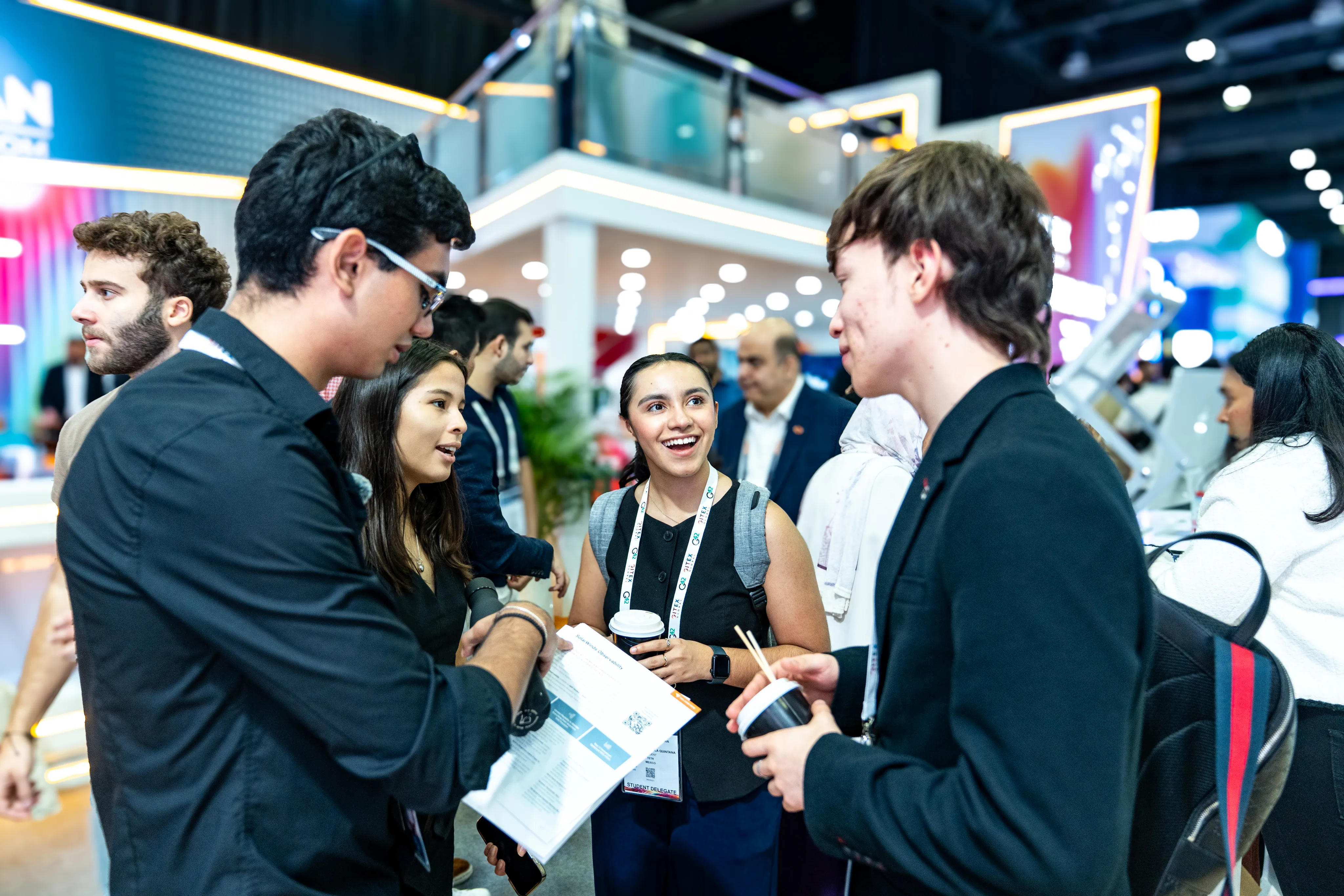
They take on real-world challenges
Beyond core AI courses, each term immerses students in actual industrial problems. Whether it’s addressing ethical challenges in AI or improving the safety and efficiency of aircrafts, the course will push students out of their comfort zones. In the process, they will learn not just how AI works but where and how to use it to solve practical problems.
They participate in business & cultural immersions
Each location, from Dubai and India to Europe and the United States, is not just a classroom backdrop. These host countries are carefully selected to represent the diversity across business environments. As students tour global headquarters and explore cultural hotspots, they develop a deep understanding of how business functions across countries and cultures.
They create pathways to real-world careers
Whether on the weekend, in the evening after classes, or during summer breaks, each term presents students with opportunities to intern with top global firms. They get to work on real-life assignments, develop practical skills and shadow top CXOs. As they work alongside professionals, they build their own network and practical expertise.
In AI degree programs, learning happens through doing. A well-designed Bachelor of Science in Artificial Intelligence should equip students to build, test, and adapt as they prepare for a career in a field that’s constantly evolving. At Tetr, we ensure graduates don’t just understand AI in theory, but are ready to apply it in the real world.
If you’d like personalised support with admissions or program details, our team can be reached at studentsupport-ug@tetr.org
What does an artificial intelligence degree focus on?
AI degree programs focus on building, applying, and optimising AI systems, covering areas like machine learning, data analysis, and more.
How are practical projects integrated into an AI undergraduate program?
A UG program like Tetr’s Bachelor of Science in Artificial Intelligence includes capstone projects in every term, where students build functional applications that solve real problems.
What kind of real-world problems do students work on in an AI degree?
Students work on industry-inspired and socially relevant problems, using AI to analyse data, optimise systems, and develop intelligent solutions across domains.
