
Category
Gap Year Program

Category
Gap Year Program 
 Bachelor of Finance & Artificial Intelligence Bachelor of Management & Technology Integrated Bachelors and Masters in Management & Technology Graduate Program in Entrepreneurial Leadership Integrated Bachelors and Masters in Management & Technology Tetr Pathfinder: China Edition Tetr Pathfinder: Europe Edition Tetr 7-day Basecamp Student Life Contact Us Jobs




Table of Contents
A closer look at why burnout shows up differently for students who are studying, travelling, and building a company all at once, and how Tetr designs burnout management for students within its curriculum.
=On paper, the life of a student entrepreneur at Tetr reads like an adventure: a new city every few months, a business idea taking shape, a network growing by the week. What rarely makes it onto that list is the quieter reality underneath, the late nights spent finishing assignments after a full day of customer interviews, the jet lag that doesn't end, the constant pressure to be building something while still learning how to build it.
This is where student burnout often begins, not from any single demand, but from all of them arriving together. For students enrolled in our global entrepreneurship programs, this overlap is a part of the curriculum. Coursework, travel, and venture-building happen in parallel rather than in sequence. That's precisely what makes the experience so formative, and exactly why burnout management for students deserves as much attention as the curriculum itself.
Burnout while studying abroad rarely looks like exhaustion at first. It looks like ambition. Students push through unfamiliar academic systems, adapt to new cultural norms, and chase entrepreneurial momentum, often treating rest as something to earn rather than something required. Each of these demands is manageable alone. Stacked together, with limited recovery time between them, they compound.
The risk isn't that students care too little; it's that they care enough to ignore the early signals. A founder mindset that prizes resilience can make it easy to mistake depletion for dedication, especially in a setting where a new pitch or a new deadline arrives every week.
Student burnout tends to surface in patterns rather than dramatic moments. Student entrepreneur burnout may look like:
difficulty concentrating during workshops that once felt engaging
irritability with teammates over small decisions
travel, once exciting, becomes just another item on a checklist
decreasing sleep, followed by diminishing motivation
Recognising these shifts early is the most reliable answer to how to avoid burnout in college and beyond. The goal isn't to eliminate pressure; ambitious work always carries some, but to notice when pressure stops producing growth and starts producing fatigue.
Sustainable ambition is less about discipline and more about rhythm, knowing when to push and when to pause. For student entrepreneurs, that might mean protecting one unstructured evening a week, separating reflection time from execution time, or simply asking a teammate how things are actually going before diving into the next task.
Community plays a larger role at Tetr than most students expect. Burnout, left unspoken, isolates. Burnout, shared with peers who understand the same pressures of studying, building, and relocating, becomes something a cohort can navigate together rather than something each student battles alone. A short conversation between teammates after a long week can do more than a productivity app ever could.
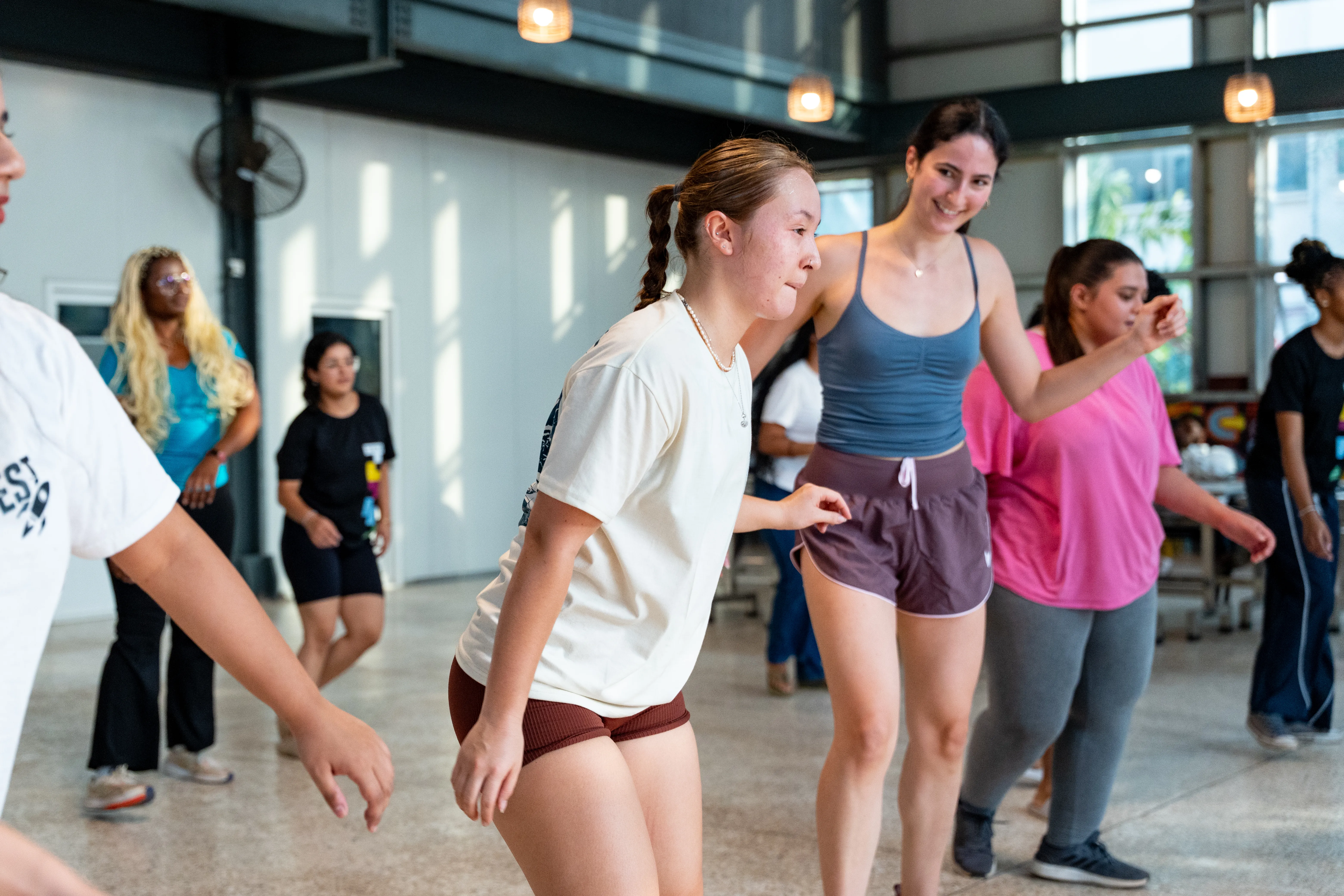
At Tetr, students across the Bachelor's Program in Management & Technology or any of our other global entrepreneurship programs move through different countries while running real ventures. Each transition- new country, new market, new team configuration- asks something different of a student, which is precisely why the gaps between them matter as much as the immersions themselves.
Faculty check-ins, peer accountability within cohorts, and built-in reflection periods between immersions aren't administrative formalities; they're designed to give students room to process change before the next one arrives. The aim isn't to slow ambition down, but to make sure it's still standing a year, or a venture, later.
Perhaps the most useful shift in perspective is this: burnout isn't a sign that a student isn't cut out for the pace of business school; it's information about pace itself. Treated that way, it becomes something to manage rather than something to hide, and effective burnout management for students often starts with exactly that reframe.
Studying, travelling, and building a company at once will always demand more than any single one of those pursuits alone. But that demand is also where some of the most lasting growth happens, the kind that comes from learning to navigate pressure, not just endure it. Students who get this right don't return from burnout while studying abroad having simply survived it; they return having learned how to build sustainably, a skill that will outlast any single venture or semester.
For personalized guidance on admissions or program details, reach out at studentsupport-ug@tetr.org.

How can I avoid burnout while studying abroad and building a startup?
Avoiding student burnout entirely isn't realistic for most ambitious schedules, but it becomes manageable by recognising early signs, like reduced focus or irritability, and building in deliberate pauses before exhaustion sets in.
Why do student entrepreneurs experience burnout?
How do global entrepreneurship programs help students manage demanding schedules?
What habits help maintain a healthy balance between study, travel, and entrepreneurship?
