
Category
Gap Year Program


Category
Gap Year Program 
 Bachelor of Finance & Artificial Intelligence Bachelor of Management & Technology Integrated Bachelors and Masters in Management & Technology Graduate Program in Entrepreneurial Leadership Integrated Bachelors and Masters in Management & Technology Tetr Pathfinder: China Edition Tetr Pathfinder: Europe Edition Tetr 7-day Basecamp Student Life Contact Us Jobs


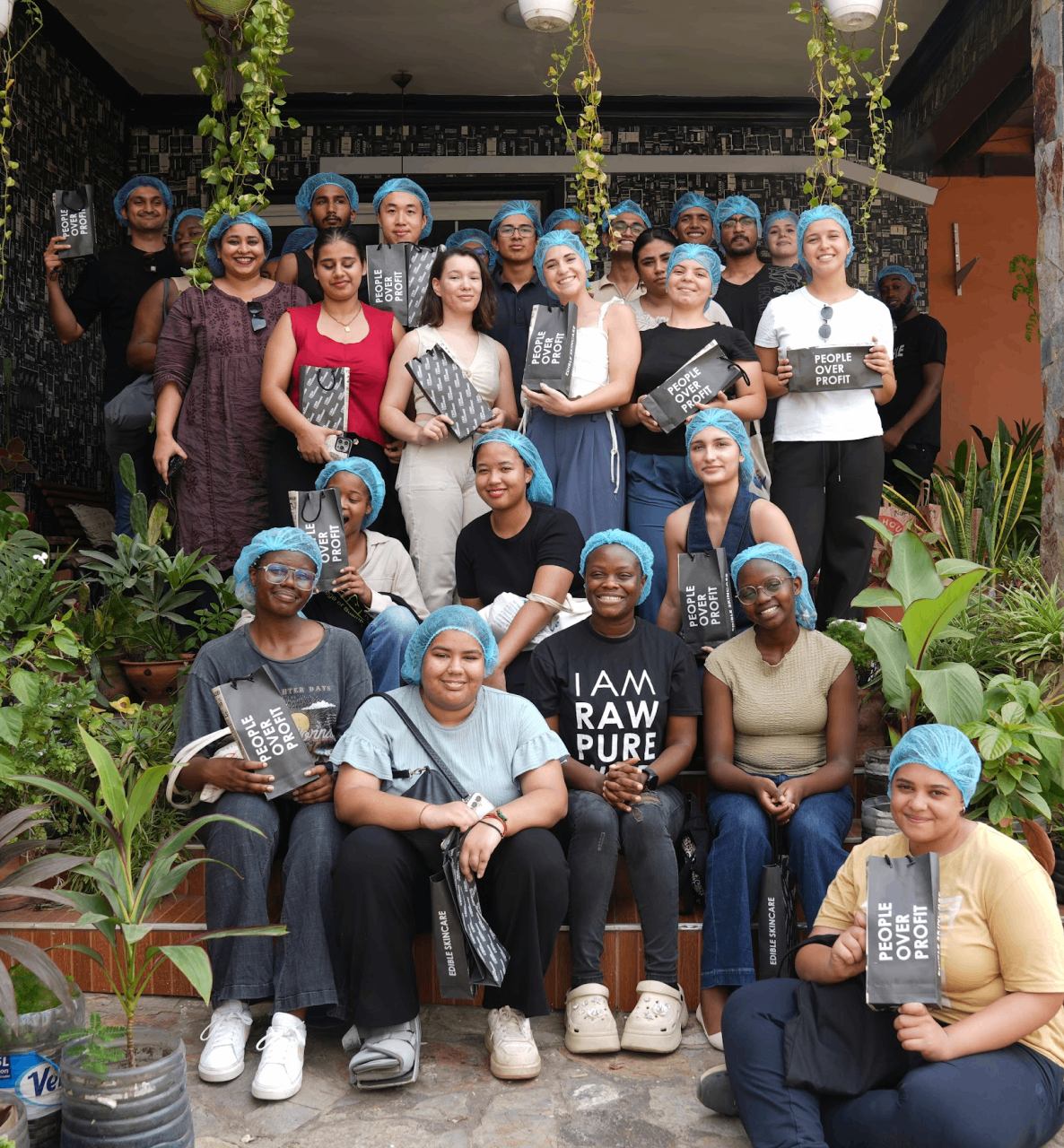
Table of Contents
Skincare you can eat sounds absurd. Until you think about what it implies.
We scrutinize what we eat, reading labels, questioning ingredients, and thinking about long-term impact. But that same scrutiny rarely shows up in skincare. Products are trusted because they look credible, not because they are easy to understand.
That's the gap Skin Gourmet is closing. And it's exactly what the Tetr tribe experienced firsthand.
Ghana produces some of the world's richest natural ingredients: shea, baobab, cocoa. Yet the value is rarely captured at the source. Raw materials are exported, processed abroad, turned into premium products, and sold back at a markup. The origin does the work. Someone else captures the upside.
This is the structural reality Skin Gourmet set out to challenge.
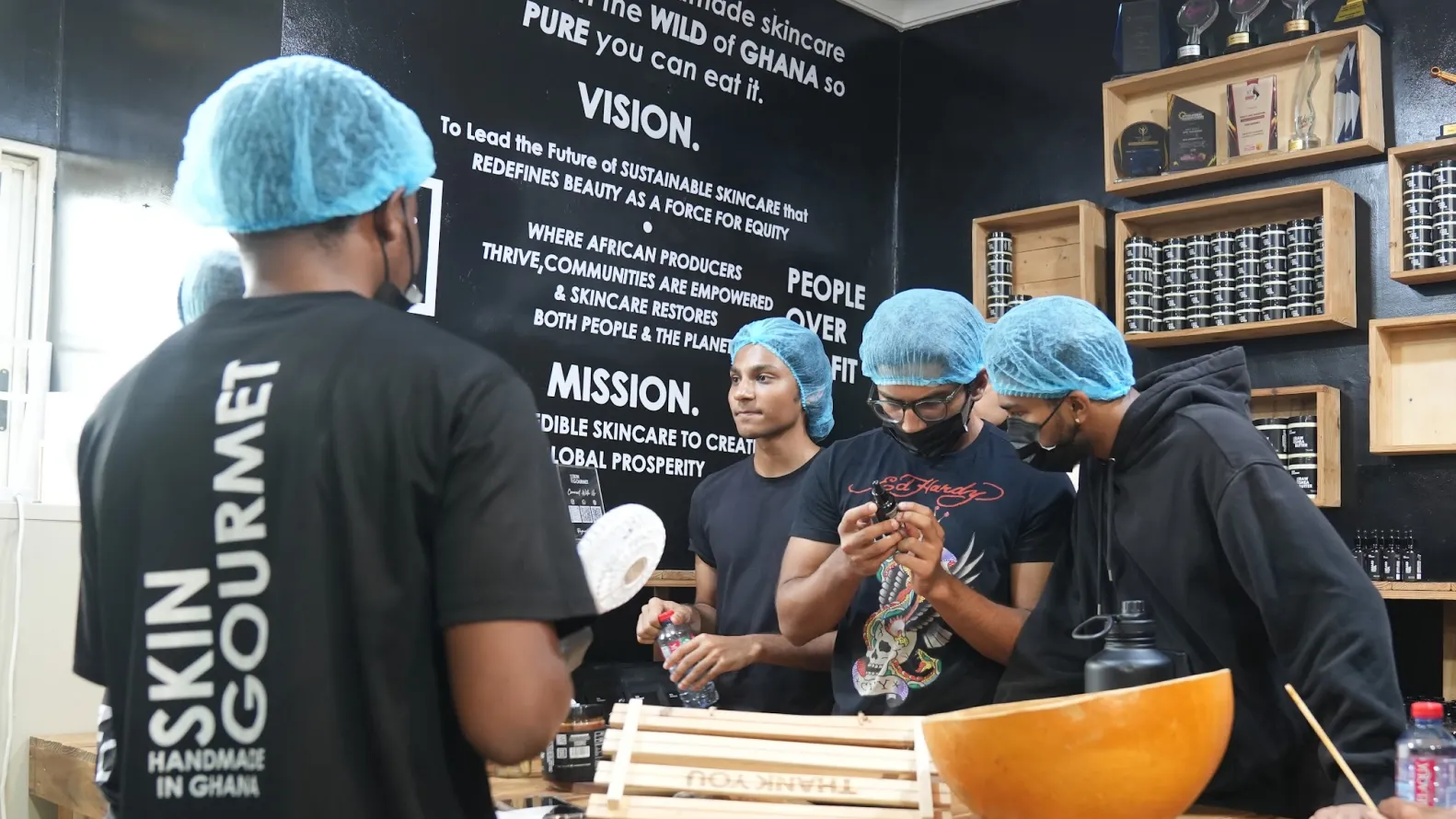
Skin Gourmet is a brand that takes a different approach to beauty and wellness.
Every product is made from sustainably sourced ingredients from Ghana, pure enough to eat, and built around a simple standard: if it is not edible, it is not skincare.
Each product is developed with two goals in mind. To create something that genuinely works, and to ensure that value stays close to where the ingredients come from, empowering local communities and reducing environmental impact in the process.
It didn’t begin with a market gap or a branding strategy. It began with a personal moment.
The founder suffered a lip injury that healed in three days using raw shea butter. That experience sent her closer to the source. In local communities, she noticed something simple but significant. Mothers used shea butter on their babies' skin and in their cooking. The same ingredient. Two very different purposes.
That raised a question the industry quietly hopes you won’t ask: if your skin absorbs what you put on it, why use products you wouldn't eat?
That question became the brand's foundation. If it's not edible, it's not skincare.
It sounds almost too simple. But that simplicity is the point. It removes the need for interpretation. No hidden ingredients, no reliance on marketing language, no formulation expertise required. You just need to recognize what's in it.
This is a genuinely different trust model in a category that has long relied on complexity to signal credibility.
Skin Gourmet started with $45 and one product. It has since grown to 50+ products reaching over 30 countries. But the more important detail is where production happens. Close to the source, not outsourced abroad. Value is built and retained in the same communities where the ingredients originate.
For decades, the standard model has been simple: rich raw materials leave ingredient-rich regions, get processed elsewhere, and return as premium products at a markup. The origin supplies the value. Someone else captures it.
Skin Gourmet reverses that. By keeping production local, the brand ensures that the communities growing and harvesting these ingredients also benefit from what they become. It is not just a sourcing decision. It is a fundamentally different idea of who the value belongs to.
In a category that leans on complexity, Skin Gourmet does the opposite. It removes friction, reduces doubt, and makes the standard itself the differentiator.
It also reframes what "natural" means, not as a marketing claim requiring validation, but as something straightforward enough to eat.
The strongest ideas don't always come from adding more. Sometimes they come from stripping things back to what already works and building honestly from there.
The businesses coming out of Tetr are not classroom projects. They are real ventures, built by students who have been trained to think globally, execute locally, and create lasting impact. Find out about some of our student-led brands here: https://tetr.com/kickstarter?utm_source=mail&utm_medium=mail&utm_campaign=ug_mofu_bofu_48hrs_jess_events_13thapril_invites
