
Category
Gap Year Program
Category
Gap Year Program 
 Bachelor of Finance & Artificial Intelligence Bachelor of Management & Technology Integrated Bachelors and Masters in Management & Technology Graduate Program in Entrepreneurial Leadership Integrated Bachelors and Masters in Management & Technology Tetr Pathfinder: China Edition Tetr Pathfinder: Europe Edition Tetr 7-day Basecamp Student Life Contact Us Jobs


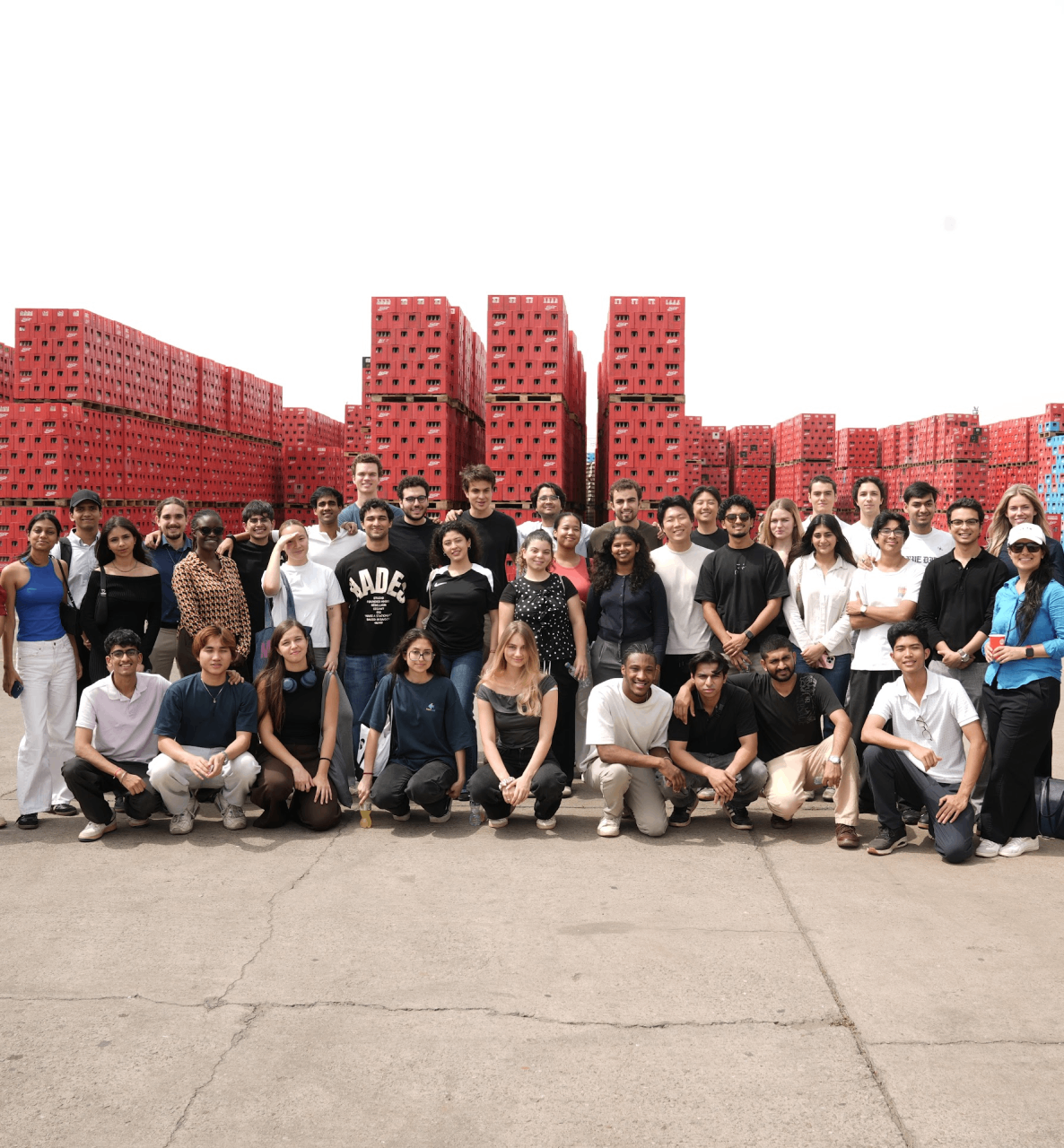
Table of Contents
Most people's mental map of global business is drawn long before they step into a boardroom. It names the same cities, celebrates the same markets, and quietly ignores entire continents that contradict that story. Walking into the Coca-Cola Bottling Compa
This week, Tetr students did exactly that.
To understand what makes Coca-Cola extraordinary, you have to stop looking at the can and start looking at everything beneath it.
The brand is more than just famous. It’s a household name.
The system behind it? Remarkable.
Over more than a century, Coca-Cola has built one of the most sophisticated operational networks in the world. Not just a product, but a living infrastructure of manufacturing hubs, bottling partners, and distribution systems that operate with the same standard, whether you are in Tokyo, São Paulo, or Accra.
The Ghana facility is not a footnote in that story. It is a full chapter.
Over 50 SKUs are produced under one roof. The network spans 13 West and Central African countries, serving more than 100 million consumers and reaching over 200,000 retail points. The operation has earned Back-to-Back Bottling Manufacturing Company of the Year.
What Coca-Cola has built is a masterclass in localisation without losing global standards. Maintaining operational excellence across markets with different currencies, regulations, and consumer behaviours requires disciplined systems thinking developed over decades.
Accra is one of its strongest examples.
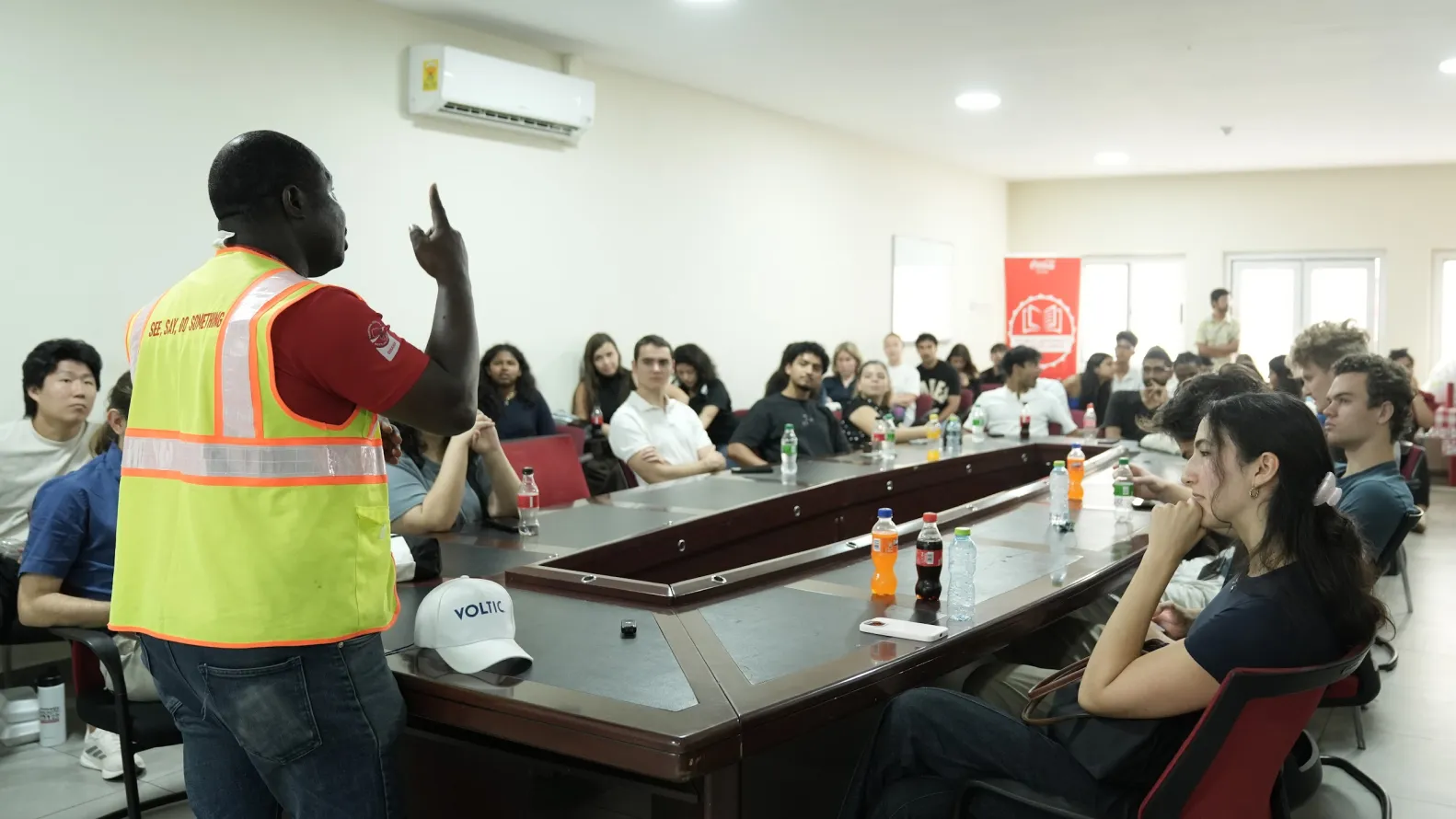
Some kinds of knowledge only exist on the ground.
No case study captures the reality of coordinating supply across multiple countries, navigating both formal retail chains and informal market networks, and doing it all to a global standard.
Tetr students walked through the operation, observing production lines and speaking directly with the managers responsible for daily decisions across the network.
They met logistics teams solving distribution challenges most business school problems do not account for. They spoke with leaders responsible for maintaining performance across complex and rapidly growing markets.
The questions that emerged were practical and precise:
How do you maintain quality across a 13-country network?
How do you reach hundreds of thousands of retail points across varied infrastructure environments?
How do you build and sustain high-performing teams in fast-growing markets?
Inside the facility, those questions had real answers.
The most dangerous thing a founder can carry is a set of assumptions they never thought to question.
Assumptions about which markets matter. Which cities produce excellence. Which parts of the world are building things worth studying. Those assumptions shape where founders look for opportunity and which problems they believe are worth solving.
A visit to the Coca-Cola facility in Accra challenges those assumptions.
What students encountered was operational excellence at global scale in a market that rarely appears in mainstream business conversations. That is not a performance gap. It is a perception gap. Entrepreneurs who recognise that difference early gain a real advantage.
They also leave with a clearer understanding of scale. Not as an aspiration, but as a daily operational reality with costs, trade-offs, and coordination across thousands of moving parts.
Africa is building rapidly. Ghana, in particular, is positioning itself as a stable industrial and trade gateway, connecting to frameworks like AfCFTA and expanding intra-African commerce.
For the next generation of global founders, understanding these markets early matters.
The students who walked into the Coca-Cola facility in Accra walked out seeing global business differently. Not because someone told them to think bigger, but because they stood inside the proof. The machines were running. The numbers were real. The people behind it all were right there in the room.
That is what Tetr immersions are built for. Not to inspire from a distance, but to rewire from the inside. Because the founders who will shape the next era of global business are not the ones who studied the world from afar. They are the ones who showed up, paid attention, and let what they saw change them.
Find out more about our immersions here: https://tetr.com/student-life
